
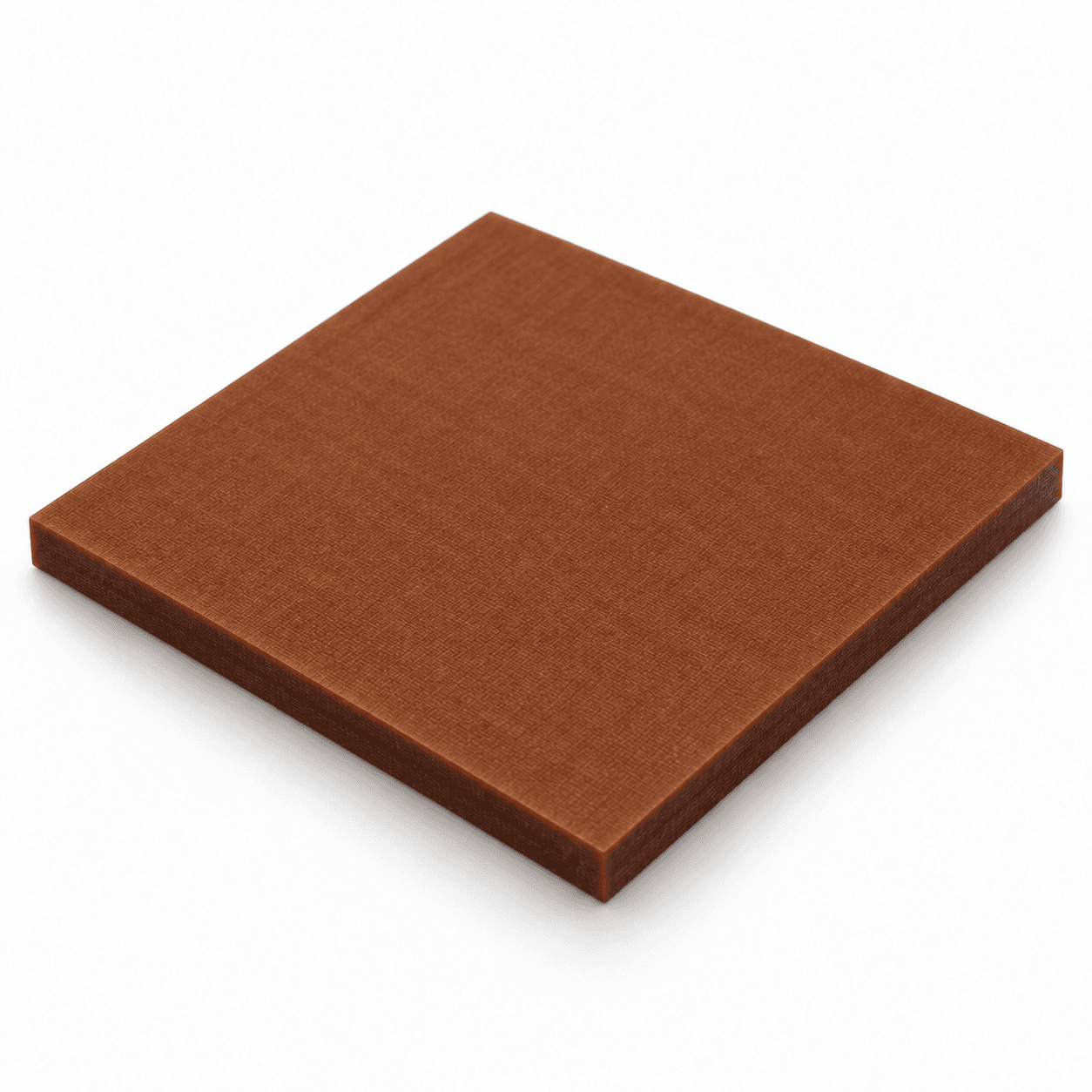
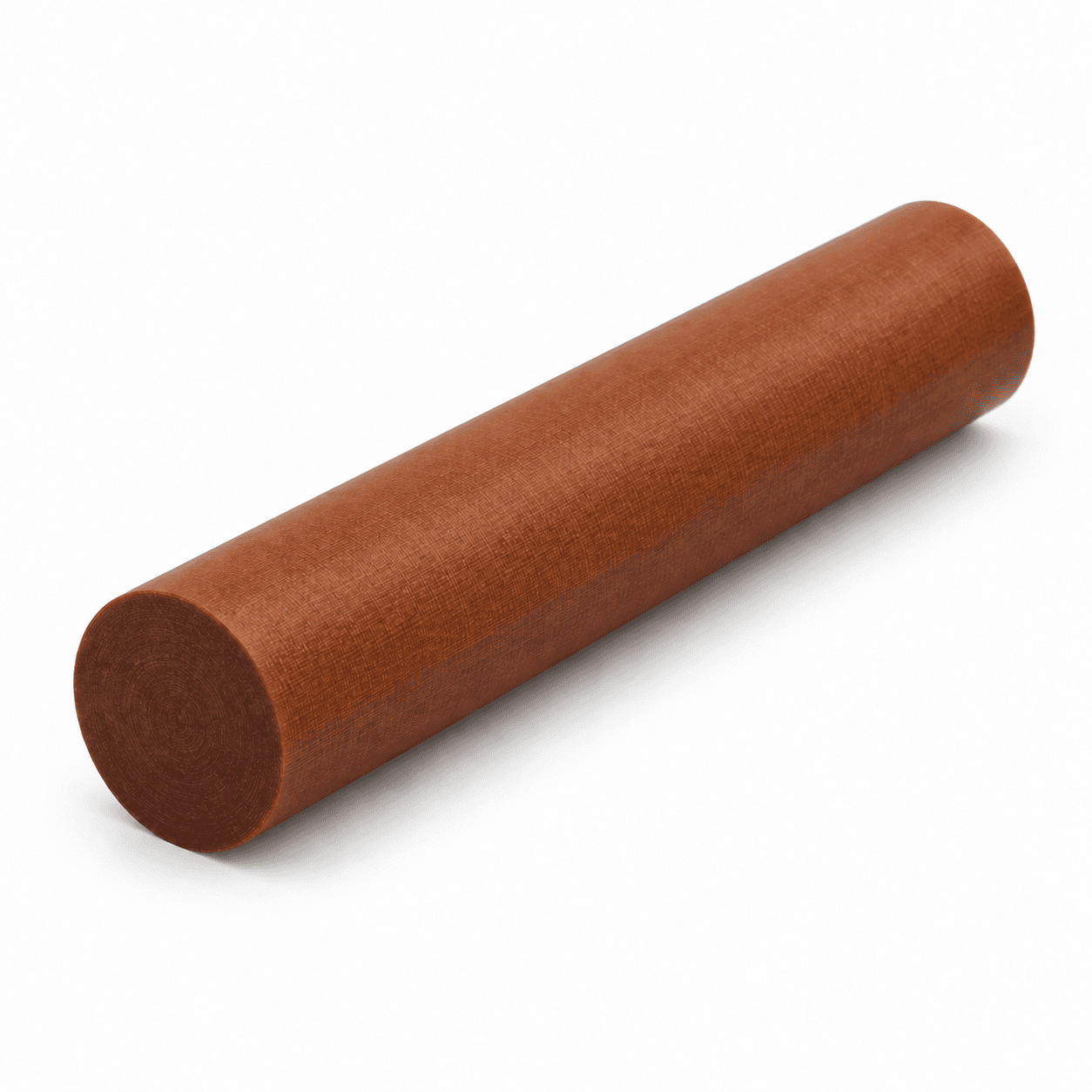
Shop G3 by shape
Select a form factor to view real-time inventory, pricing, and custom cut-to-size options.
Filters
Color
Shape
Availability
Thickness (sheet) / Diameter (rod)
Rods
3 sizes · 3 SKUs| Short Description | Color | Diameter | Length | Stock | Price | Action |
|---|---|---|---|---|---|---|
| G3 - 0.625" dia x 48" Natural Rod | Nat. | 0.625″ | 48″ | 65In stock | $56.71 | |
| G3 - 1" dia x 48" Natural Rod | Nat. | 1.000″ | 48″ | 67In stock | $32.96 | |
| G3 - 1.5" dia x 48" Natural Rod | Nat. | 1.500″ | 48″ | 8In stock | $68.14 |
Material Overview
What is Phenolic Grade G3?
G-3 glass phenolic is a woven-glass-fabric/phenolic-resin thermoset laminate defined by NEMA LI-1 Grade G-3. It belongs to the glass phenolic family — composites manufactured by impregnating woven glass cloth with phenolic resin, then curing under heat and pressure. Compared to paper-based phenolics, the woven glass reinforcement gives G-3 g3 material significantly improved tensile strength and dimensional stability, making it a practical step up for applications that demand more mechanical load-bearing capability alongside dependable electrical insulation.
G-3 delivers 76,000 psi tensile strength, 55,000 psi flexural strength, and 18,000 psi shear strength with a Rockwell M110 hardness. Water absorption over 24 hours is 2.0% — higher than epoxy-based grades but acceptable for many dry or low-humidity environments. Maximum continuous service temperature is 280°F (140°C). These properties suit G-3 for switchgear panels, terminal boards, electrical enclosures, spacers, and structural insulating components where glass-reinforced phenolic performance is specified.
Standards. G-3 meets NEMA LI-1 Grade G-3 and carries a UL 94HB flammability rating. Test methods follow ASTM D709. The phenolic resin system provides inherent rigidity and good chemical resistance, though moisture absorption is higher than glass epoxy alternatives.
Related materials. When moisture resistance and higher dielectric strength are critical, glass epoxy grades such as G-10 or FR-4 provide lower water absorption and stronger electrical performance. For cost-sensitive applications with lighter mechanical demands, paper phenolic grades are available in the broader glass phenolic family at Ready Plastics. Contact us for available sheet and rod dimensions.
Technical Specifications
Phenolic Grade G3 properties
Typical values at 23°C / 50% RH. Values are nominal and not guaranteed; refer to lot-specific certificates of conformance for production parts.
Frequently Asked Questions
Phenolic Grade G3, answered
What is G-3 material?
G-3 is a NEMA LI-1 Grade G-3 glass-cloth-reinforced phenolic thermoset laminate. It is made from woven glass fabric bonded with phenolic resin and is used for electrical insulation panels, switchgear components, terminal boards, and structural parts in industrial electrical equipment. It offers 76,000 psi tensile strength and operates up to 140°C (280°F).
What is the difference between G-3 and G-10?
G-3 uses phenolic resin as its binder, while G-10 uses epoxy resin. G-10 provides lower water absorption (0.11% vs. 2.0%), better dielectric properties in humid environments, and higher compressive strength. G-3 is a lower-cost option when moisture exposure is limited and phenolic performance characteristics are acceptable.
What thicknesses and shapes does Ready Plastics stock in G-3?
Ready Plastics stocks G-3 glass phenolic in sheet form. Contact Ready Plastics or visit the product page for current available thicknesses and cut-to-size options.
Can G-3 be machined?
Yes. G-3 glass phenolic can be drilled, sawed, milled, and punched on conventional equipment. Carbide tooling is recommended due to the abrasive glass cloth reinforcement. Dust control is advisable during machining.
Is G-3 the same as a paper phenolic?
No. G-3 uses woven glass cloth as its reinforcement, which provides significantly higher tensile strength and better dimensional stability than paper-based phenolics. Paper phenolic grades (such as XX or XXX) use paper as the reinforcing substrate and are better suited for lower-stress, lower-cost applications.
Ready to spec material for your build?
Get a quote on cut-to-size sheets and rods, request a full data sheet, or talk to a plastics engineer. We answer in under two hours, M–F 8am–6pm ET.
All stocked G3 sizes & prices
- G3 - 0.010" 36 x 48 Natural Sheet — $24.24
- G3 - 0.010" 48 x 48 Natural Sheet — $24.91
- G3 - 0.010" 48 x 96 Natural Sheet — $64.62
- G3 - 0.012" 36 x 48 Natural Sheet — $26.91
- G3 - 0.012" 48 x 48 Natural Sheet — $27.45
- G3 - 0.012" 48 x 96 Natural Sheet — $71.76
- G3 - 0.015" 36 x 48 Natural Sheet — $29.34
- G3 - 0.015" 48 x 48 Natural Sheet — $29.94
- G3 - 0.015" 48 x 96 Natural Sheet — $78.17
- G3 - 0.018" 36 x 48 Natural Sheet — $32.76
- G3 - 0.018" 48 x 48 Natural Sheet — $33.42
- G3 - 0.018" 48 x 96 Natural Sheet — $87.31
- G3 - 0.020" 36 x 48 Natural Sheet — $36.41
- G3 - 0.020" 48 x 48 Natural Sheet — $37.09
- G3 - 0.020" 48 x 96 Natural Sheet — $97.02
- G3 - 0.025" 36 x 48 Natural Sheet — $42.53
- G3 - 0.025" 48 x 48 Natural Sheet — $43.15
- G3 - 0.025" 48 x 96 Natural Sheet — $113.37
- G3 - 0.031" 36 x 48 Natural Sheet — $52.77
- G3 - 0.031" 48 x 48 Natural Sheet — $53.28
- G3 - 0.031" 48 x 96 Natural Sheet — $140.57
- G3 - 0.040" 36 x 48 Natural Sheet — $68.08
- G3 - 0.040" 48 x 48 Natural Sheet — $68.78
- G3 - 0.040" 48 x 96 Natural Sheet — $181.39
- G3 - 0.047" 48 x 48 Natural Sheet — $80.26
- G3 - 0.047" 48 x 96 Natural Sheet — $213.13
- G3 - 0.062" 36 x 48 Natural Sheet — $99.82
- G3 - 0.062" 48 x 48 Natural Sheet — $99.48
- G3 - 0.062" 48 x 96 Natural Sheet — $265.95
- G3 - 0.070" 36 x 48 Natural Sheet — $112.71
- G3 - 0.070" 48 x 48 Natural Sheet — $112.76
- G3 - 0.070" 48 x 96 Natural Sheet — $300.27
- G3 - 0.072" 36 x 48 Natural Sheet — $115.92
- G3 - 0.072" 48 x 48 Natural Sheet — $115.99
- G3 - 0.072" 48 x 96 Natural Sheet — $308.84
- G3 - 0.078" 36 x 48 Natural Sheet — $125.58
- G3 - 0.078" 48 x 48 Natural Sheet — $125.46
- G3 - 0.078" 48 x 96 Natural Sheet — $334.59
- G3 - 0.090" 36 x 48 Natural Sheet — $144.92
- G3 - 0.090" 48 x 48 Natural Sheet — $144.72
- G3 - 0.090" 48 x 96 Natural Sheet — $386.05
- G3 - 0.093" 36 x 48 Natural Sheet — $149.74
- G3 - 0.093" 48 x 48 Natural Sheet — $149.57
- G3 - 0.093" 48 x 96 Natural Sheet — $398.94
- G3 - 0.125" 36 x 48 Natural Sheet — $201.28
- G3 - 0.125" 48 x 48 Natural Sheet — $200.84
- G3 - 0.125" 48 x 96 Natural Sheet — $536.20
- G3 - 0.156" 36 x 48 Natural Sheet — $251.21
- G3 - 0.156" 48 x 48 Natural Sheet — $250.87
- G3 - 0.156" 48 x 96 Natural Sheet — $669.19
- G3 - 0.187" 36 x 48 Natural Sheet — $301.12
- G3 - 0.187" 48 x 48 Natural Sheet — $300.93
- G3 - 0.187" 48 x 96 Natural Sheet — $802.18
- G3 - 0.200" 36 x 48 Natural Sheet — $322.05
- G3 - 0.200" 48 x 48 Natural Sheet — $321.86
- G3 - 0.200" 48 x 96 Natural Sheet — $857.94
- G3 - 0.250" 36 x 48 Natural Sheet — $402.59
- G3 - 0.250" 48 x 48 Natural Sheet — $402.27
- G3 - 0.250" 48 x 96 Natural Sheet — $1072.41
- G3 - 0.312" 36 x 48 Natural Sheet — $502.44
- G3 - 0.312" 48 x 48 Natural Sheet — $501.75
- G3 - 0.312" 48 x 96 Natural Sheet — $1338.39
- G3 - 0.375" 36 x 48 Natural Sheet — $603.89
- G3 - 0.375" 48 x 48 Natural Sheet — $603.14
- G3 - 0.375" 48 x 96 Natural Sheet — $1608.66
- G3 - 0.406" 36 x 48 Natural Sheet — $653.82
- G3 - 0.406" 48 x 48 Natural Sheet — $653.33
- G3 - 0.406" 48 x 96 Natural Sheet — $1741.63
- G3 - 0.437" 36 x 48 Natural Sheet — $703.75
- G3 - 0.437" 48 x 48 Natural Sheet — $703.24
- G3 - 0.437" 48 x 96 Natural Sheet — $1874.62
- G3 - 0.500" 36 x 48 Natural Sheet — $805.19
- G3 - 0.500" 48 x 48 Natural Sheet — $804.61
- G3 - 0.500" 48 x 96 Natural Sheet — $2144.86
- G3 - 0.550" 36 x 48 Natural Sheet — $885.72
- G3 - 0.550" 48 x 48 Natural Sheet — $885.05
- G3 - 0.550" 48 x 96 Natural Sheet — $2359.36
- G3 - 0.612" 36 x 48 Natural Sheet — $985.56
- G3 - 0.612" 48 x 48 Natural Sheet — $984.55
- G3 - 0.612" 48 x 96 Natural Sheet — $2625.31
- G3 - 0.625" 36 x 48 Natural Sheet — $1006.48
- G3 - 0.625" 48 x 48 Natural Sheet — $1006.09
- G3 - 0.625" 48 x 96 Natural Sheet — $2681.10
- G3 - 0.625" dia x 48" Natural Rod — $56.71
- G3 - 0.750" 36 x 48 Natural Sheet — $1207.80
- G3 - 0.750" 48 x 48 Natural Sheet — $1206.91
- G3 - 0.750" 48 x 96 Natural Sheet — $3217.32
- G3 - 0.800" 36 x 48 Natural Sheet — $1288.31
- G3 - 0.800" 48 x 48 Natural Sheet — $1287.66
- G3 - 0.800" 48 x 96 Natural Sheet — $3431.81
- G3 - 0.875" 36 x 48 Natural Sheet — $1409.11
- G3 - 0.875" 48 x 48 Natural Sheet — $1408.38
- G3 - 0.875" 48 x 96 Natural Sheet — $3753.55
- G3 - 1.000" 36 x 48 Natural Sheet — $1610.39
- G3 - 1.000" 48 x 48 Natural Sheet — $1609.22
- G3 - 1.000" 48 x 96 Natural Sheet — $4289.76
- G3 - 1.125" 36 x 48 Natural Sheet — $1811.71
- G3 - 1.125" 48 x 48 Natural Sheet — $1810.69
- G3 - 1.125" 48 x 96 Natural Sheet — $4825.99
- G3 - 1.187" 36 x 48 Natural Sheet — $1911.55
- G3 - 1.187" 48 x 48 Natural Sheet — $1910.48
- G3 - 1.187" 48 x 96 Natural Sheet — $5091.94
- G3 - 1.250" 36 x 48 Natural Sheet — $2013.02
- G3 - 1.250" 48 x 48 Natural Sheet — $2011.54
- G3 - 1.250" 48 x 96 Natural Sheet — $5362.21
- G3 - 1.350" 36 x 48 Natural Sheet — $2174.06
- G3 - 1.350" 48 x 48 Natural Sheet — $2172.75
- G3 - 1.350" 48 x 96 Natural Sheet — $5791.19
- G3 - 1.375" 36 x 48 Natural Sheet — $2214.32
- G3 - 1.375" 48 x 48 Natural Sheet — $2212.99
- G3 - 1.375" 48 x 96 Natural Sheet — $5898.44
- G3 - 1.5" dia x 48" Natural Rod — $68.14
- G3 - 1.500" 36 x 48 Natural Sheet — $2415.62
- G3 - 1.500" 48 x 48 Natural Sheet — $2413.85
- G3 - 1.500" 48 x 96 Natural Sheet — $6434.65
- G3 - 1.625" 36 x 48 Natural Sheet — $2616.91
- G3 - 1.625" 48 x 48 Natural Sheet — $2615.31
- G3 - 1.625" 48 x 96 Natural Sheet — $6970.87
- G3 - 1.750" 36 x 48 Natural Sheet — $2818.23
- G3 - 1.750" 48 x 48 Natural Sheet — $2815.54
- G3 - 1.750" 48 x 96 Natural Sheet — $7507.10
- G3 - 1.875" 36 x 48 Natural Sheet — $3019.54
- G3 - 1.875" 48 x 48 Natural Sheet — $3017.62
- G3 - 1.875" 48 x 96 Natural Sheet — $8043.31
- G3 - 1" dia x 48" Natural Rod — $32.96
- G3 - 2.000" 36 x 48 Natural Sheet — $3463.02
- G3 - 2.000" 48 x 48 Natural Sheet — $3217.76
- G3 - 2.000" 48 x 96 Natural Sheet — $9224.66
- G3 - 2.100" 36 x 48 Natural Sheet — $3636.16
- G3 - 2.100" 48 x 48 Natural Sheet — $3668.53
- G3 - 2.100" 48 x 96 Natural Sheet — $9685.89
- G3 - 2.250" 36 x 48 Natural Sheet — $3895.89
- G3 - 2.250" 48 x 48 Natural Sheet — $3930.52
- G3 - 2.250" 48 x 96 Natural Sheet — $10377.74
- G3 - 2.500" 36 x 48 Natural Sheet — $4328.76
- G3 - 2.500" 48 x 48 Natural Sheet — $4367.28
- G3 - 2.500" 48 x 96 Natural Sheet — $11530.83
- G3 - 3.000" 36 x 48 Natural Sheet — $5572.33
- G3 - 3.000" 48 x 48 Natural Sheet — $5240.69
- G3 - 3.000" 48 x 96 Natural Sheet — $14843.36
- G3 - 3.250" 36 x 48 Natural Sheet — $6036.70
- G3 - 3.250" 48 x 48 Natural Sheet — $6134.79
- G3 - 3.250" 48 x 96 Natural Sheet — $16080.33
- G3 - 3.500" 36 x 48 Natural Sheet — $6501.06
- G3 - 3.500" 48 x 48 Natural Sheet — $6606.69
- G3 - 3.500" 48 x 96 Natural Sheet — $17317.27
- G3 - 4.000" 36 x 48 Natural Sheet — $7662.29
- G3 - 4.000" 48 x 48 Natural Sheet — $7550.50
- G3 - 4.000" 48 x 96 Natural Sheet — $20410.47
- G3 - 4.250" 36 x 48 Natural Sheet — $8141.16
- G3 - 4.250" 48 x 48 Natural Sheet — $8308.46
- G3 - 4.250" 48 x 96 Natural Sheet — $21686.12
- G3 - 4.500" 36 x 48 Natural Sheet — $8620.07
- G3 - 4.500" 48 x 48 Natural Sheet — $8797.18
- G3 - 4.500" 48 x 96 Natural Sheet — $22961.78
- G3 - 5.000" 36 x 48 Natural Sheet — $9577.87
- G3 - 5.000" 48 x 48 Natural Sheet — $9774.66
- G3 - 5.000" 48 x 96 Natural Sheet — $25513.09